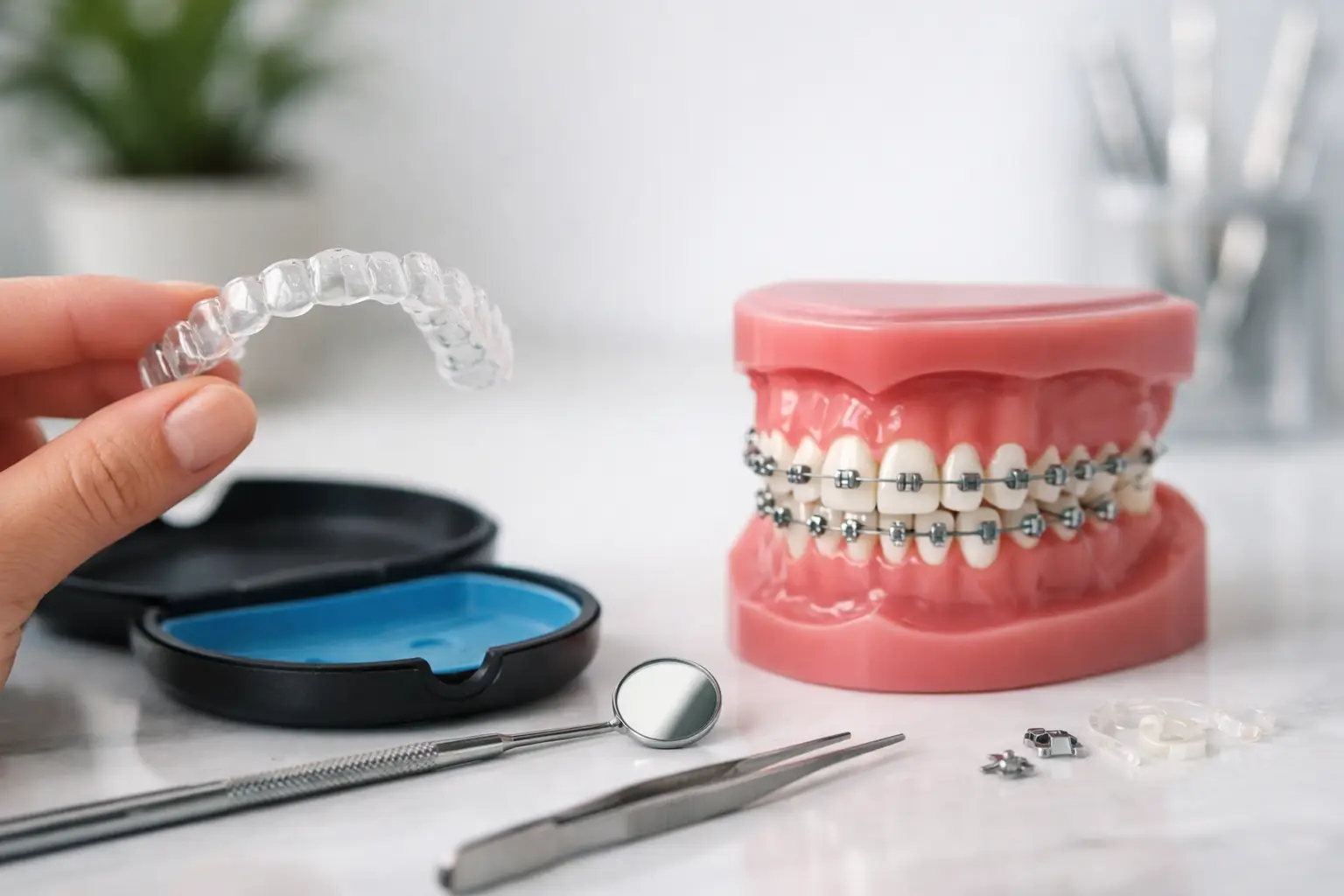
A crooked tooth that catches in photos, a bite that feels off, or crowding that makes brushing difficult can all lead to the same question: clear aligners versus braces, which treatment is right for you? The answer is rarely about appearance alone. Your bite, tooth movement needs, daily routine, budget, and comfort preferences all deserve a place in the decision.
Both options can create healthier, more confident smiles. The right choice is the one that can address your specific orthodontic concerns predictably while fitting into real life – whether that means school, work meetings, family meals, sports, or an upcoming event.
Clear Aligners Versus Braces: The Main Difference
Clear aligners are custom-made, removable trays that gradually guide teeth into new positions. You wear a series of aligners, changing to the next set according to your dentist’s instructions. Because they are transparent and sit closely over the teeth, they are a discreet option for many adults and teens.
Braces use brackets bonded to the teeth and a wire that is adjusted over time. Modern braces are smaller and more comfortable than many people remember, but they remain visible and fixed in place throughout treatment. Since they are always working, they do not depend on the patient remembering to put them back in after meals.
Neither treatment is automatically better. Clear aligners offer flexibility and a subtle look. Braces offer continuous control and can be especially useful when tooth movement is more complex. A proper orthodontic assessment looks beyond what is visible in the mirror and considers your jaw relationship, bite function, gum health, tooth roots, and long-term stability.
When Clear Aligners May Be a Good Fit
Clear aligners are often appealing to patients who want to straighten their teeth without brackets and wires. They can be removed for meals, brushing, flossing, and special occasions. That makes oral hygiene simpler for many people, particularly if they already take excellent care of their teeth and gums.
They may be well suited for mild to moderate crowding, spacing, certain bite concerns, and patients who want a lower-profile orthodontic option. Clear aligners can also be effective for more involved cases, sometimes with small tooth-coloured attachments that give the trays a better grip. In some plans, slight reshaping between teeth or other techniques may be recommended to create the space needed for safe movement.
The key commitment is wear time. Aligners generally need to be worn about 20 to 22 hours each day. Taking them out for coffee and forgetting them on a napkin, leaving them at home before a long shift, or wearing them only at night can slow progress. For a busy adult who is highly consistent, that flexibility can feel liberating. For someone who knows they are likely to misplace or remove them often, it can become frustrating.
Clear aligners also need attentive care. They should be rinsed and cleaned regularly, and teeth should be brushed before putting them back in after meals whenever possible. Drinking plain water while wearing aligners is usually fine, but hot drinks can warp the plastic and coloured drinks can stain it. These are manageable habits, but they are still part of the treatment.
When Braces May Be the Better Choice
Braces are a dependable option for children, teens, and adults. Because they stay on the teeth, they work around the clock without relying on daily wear-time decisions. This can make braces a practical choice for younger patients or anyone who prefers a treatment that cannot be misplaced.
They are often recommended for more significant rotations, severely crowded teeth, teeth that need to move vertically, or complex bite concerns. Some cases involving jaw growth, impacted teeth, or substantial movement may be more predictable with braces. That does not mean every complex case requires braces, but it does mean treatment should not be chosen based only on a preference for an invisible option.
Braces require changes to eating and cleaning habits. Hard candies, sticky foods, popcorn kernels, and chewing ice can damage brackets or wires. Brushing takes more patience because food and plaque can collect around the hardware. Interdental brushes, floss threaders, or a water flosser can make cleaning easier. With the right routine and regular hygiene visits, braces can be maintained safely and comfortably.
Some patients also appreciate the certainty of braces. There is no need to decide whether to wear them before a dinner out or to keep track of a tray between meals. Once treatment begins, the system is in place and active every day.
Comfort, Appearance, and Daily Life
Both clear aligners and braces can cause pressure or tenderness when teeth are moving. This is usually most noticeable after a new aligner is started or a braces adjustment is completed. The sensation often settles within a few days and is a sign that controlled movement is taking place.
Aligners tend to have smooth edges, although some patients experience temporary irritation or a slight change in speech while they adjust. Braces can rub against the lips and cheeks at first, and orthodontic wax can help protect tender areas. A loose wire or broken bracket should be addressed promptly so you can stay comfortable and on schedule.
Appearance matters to many patients, and there is no need to dismiss that concern. Clear aligners are less noticeable in conversation and photographs, which can be meaningful for professionals, performers, or people who simply prefer a discreet treatment. Braces are more visible, but many patients feel increasingly confident once they see their teeth beginning to move. For some teens, coloured elastics even make braces feel more personal.
Cost and Treatment Timing
The cost of orthodontic treatment depends on the complexity of your case, the length of treatment, the appliances needed, and the follow-up care involved. Clear aligners and braces can fall into similar price ranges for some cases, while others differ significantly. A clear treatment plan should explain what is included, such as records, adjustments, aligner refinements where appropriate, retainers, and emergency visits.
Insurance coverage varies by plan, and orthodontic benefits may have lifetime maximums, age limits, or other conditions. Direct insurance billing can make the process easier when available, but it is still wise to understand your own coverage before beginning. Ask about payment options as well, especially if you are planning treatment for more than one family member.
Treatment time also varies. Some limited alignment cases may take several months, while comprehensive orthodontic treatment often takes one to two years or longer. The most accurate timeline comes after an examination and diagnostic records. Promises of a fast result without a close look at your bite and oral health deserve caution.
Your Oral Health Comes First
Teeth move best in a healthy foundation. Active gum disease, untreated cavities, failing restorations, or poor oral hygiene may need to be addressed before orthodontic treatment begins. Straightening teeth can make them easier to clean in the long term, but orthodontics should support oral health rather than postpone necessary care.
Retainers are also essential after either treatment. Teeth naturally tend to shift over time, particularly in the lower front teeth. Wearing retainers as instructed protects the time, effort, and investment you have put into your new smile.
Can adults get braces or clear aligners?
Yes. Healthy adult teeth can be moved at many ages. Adults may need additional planning if they have gum recession, bone loss, crowns, implants, or missing teeth, but these factors do not automatically rule out orthodontic care.
Are clear aligners easier to clean than braces?
For many patients, yes, because aligners are removed for brushing and flossing. However, the advantage only works when aligners are cleaned properly and worn consistently. Braces require more detailed cleaning around brackets and wires, but effective tools and a good routine make that manageable.
Will I need to wear a retainer forever?
Long-term retainer wear is the best way to help maintain alignment. Your dentist will recommend a schedule based on your treatment and risk of shifting. Many patients transition to nighttime wear after an initial full-time period.
The most helpful next step is a personal assessment rather than choosing from photos or advertisements. At Bright Smile Dental Clinic, a careful consultation can clarify what your teeth and bite need, answer your questions without pressure, and help you choose a treatment that feels comfortable from the first appointment through the day you see your finished smile.