A child rarely announces a dental concern at a convenient time. It may be a sore tooth before school, a chipped front tooth after sports, or a sudden worry about an upcoming visit. For children’s dental care Scarborough families can rely on, the goal is not simply to fix a problem when it appears. It is to help children feel safe at the dentist while protecting their comfort, confidence, and long-term oral health.
At Bright Smile Dental Clinic, care is shaped around the child in the chair and the parent making decisions beside them. Some children are eager and talkative. Others need a slower introduction, simple explanations, and time to get comfortable. Both responses are completely normal.
Why early dental visits matter
A child’s first dental visits create a foundation that can last well beyond childhood. Regular examinations allow the dental team to monitor how teeth and jaws are developing, identify early signs of decay, and discuss habits that affect oral health, such as brushing, snacking, thumb sucking, or using a soother.
Early appointments are also useful when nothing is wrong. A calm, routine visit helps a child learn that a dental office is a familiar place, not somewhere they only go when they are in pain. That experience can make future cleanings, fillings, orthodontic assessments, or other care less intimidating.
The timing and frequency of visits depend on a child’s age, risk of cavities, oral hygiene habits, and findings during the examination. Children with a history of decay, braces, dry mouth, certain medical needs, or difficulty brushing thoroughly may benefit from more frequent monitoring. Families receive clearer guidance when recommendations are based on the individual child rather than a one-size-fits-all schedule.
What happens at a children’s dental appointment?
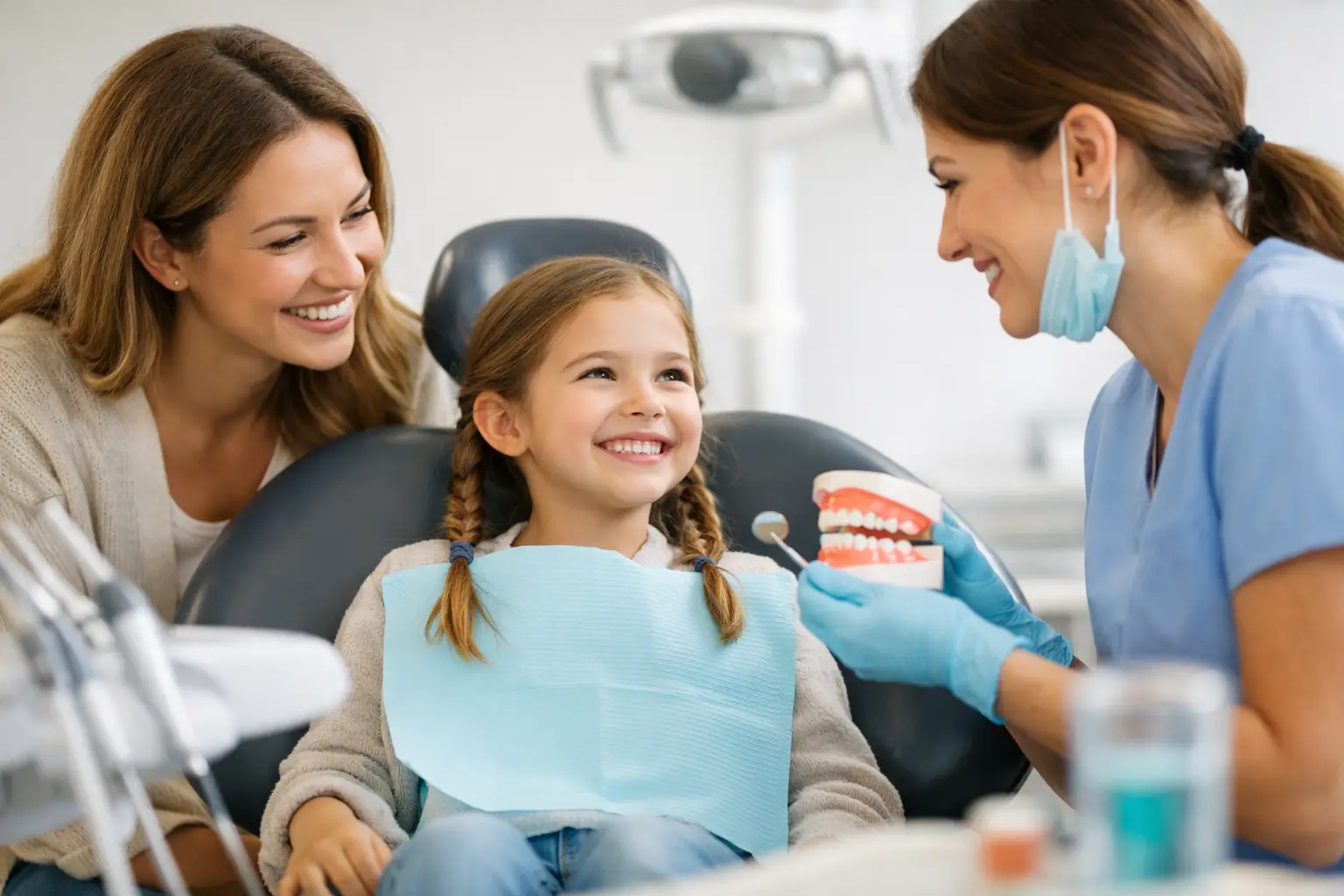
A positive appointment is usually unhurried and age-appropriate. The team may begin by showing a child the chair, explaining instruments in simple language, or allowing them to ask questions. Small steps can make a meaningful difference for a child who is unsure of what to expect.
The examination may include checking the teeth, gums, bite, jaw development, and areas where plaque or early decay can build up. When appropriate, dental X-rays may be recommended to assess concerns that cannot be seen during a visual exam, including decay between teeth or the development of permanent teeth. X-rays are not automatically needed at every visit. The decision should reflect the child’s clinical needs and risk factors.
A hygiene visit focuses on removing plaque and buildup, then reinforcing brushing and flossing techniques in a way children can understand. Parents can use this time to raise practical questions, from toothpaste amounts and fluoride to a child’s sensitivity, dietary habits, or a tooth that has been slow to come in.
Prevention at home makes the biggest difference
Professional care and daily home routines work together. Even an excellent cleaning cannot replace consistent brushing, especially along the gumline and on the chewing surfaces of back teeth. Younger children need help with brushing because their hand skills are still developing. Many school-aged children still benefit from a parent checking that no areas were missed.
Fluoride toothpaste can help strengthen enamel and lower the risk of cavities when used as recommended by a dental professional. The right amount depends on age and a child’s ability to spit. If you are uncertain about the amount to use or whether your child is swallowing toothpaste, ask at their appointment rather than relying on conflicting advice online.
Food and drink choices matter as well, but prevention does not require perfection. Frequent exposure to sugary drinks, sticky snacks, and constant grazing can increase cavity risk because teeth have less time to recover between acid attacks. Water between meals, regular meal and snack times, and brushing before bed are practical habits that protect a growing smile without making family life unnecessarily restrictive.
Children’s dental care in Scarborough for common concerns
Even with careful routines, dental problems can happen. A cavity may develop in a hard-to-clean area, a baby tooth may be damaged in a fall, or a child may complain that cold foods hurt. Early assessment often gives families more options and may allow treatment to stay simpler.
For minor decay, a filling may be recommended to remove damaged tooth structure and restore function. If a tooth has more extensive damage, the treatment plan may involve other restorative options. The right approach depends on the tooth involved, the extent of decay, the child’s comfort, and how long the tooth is expected to remain in place.
Sports injuries deserve prompt attention, particularly when a permanent tooth is loose, chipped, pushed out of position, or knocked out. If a permanent tooth is completely knocked out, time matters. Handle it by the crown rather than the root, and seek urgent dental advice. A knocked-out baby tooth should not be placed back into the socket, as this could affect the developing permanent tooth.
Parents should also arrange an appointment for persistent tooth pain, swollen gums or facial swelling, bleeding that does not settle after an injury, sensitivity that continues, or a broken restoration. Pain is not something a child should have to simply manage until a regular checkup.
Helping an anxious child feel more comfortable
Dental anxiety can look different from child to child. One may become quiet and avoid eye contact; another may cry, ask repeated questions, or refuse to sit in the chair. This is not misbehaviour. It is a signal that the child needs more reassurance, predictability, or time.
Parents can help by using calm, neutral language before the visit. It is usually better to say that the dentist will count and check the teeth than to introduce frightening words or make promises that no treatment will be needed. Let the dental team explain procedures in child-friendly terms and answer questions honestly.
For children who need treatment, comfort-first care may include breaks, clear step-by-step communication, gentle techniques, and options to help manage anxiety when clinically appropriate. Sedation dentistry may be considered in some situations, but it is not the best fit for every child. The decision depends on the procedure, the child’s health history, their level of anxiety, and the dentist’s assessment. Parents should receive a clear explanation of benefits, limitations, preparation, and aftercare before proceeding.
Watching jaw growth and tooth alignment
Children do not need to wait until all permanent teeth arrive to have their bite assessed. Routine examinations can identify crowding, crossbites, spacing concerns, habits affecting jaw development, or teeth that are erupting in an unusual position. Early observation does not always mean early orthodontic treatment. Often, the most appropriate plan is simply to monitor growth and revisit the conversation at the right time.
When orthodontic treatment is recommended, the timing matters. Beginning too soon may not provide an advantage, while waiting too long can sometimes limit options. A personalized assessment helps families understand what is happening, what can wait, and what should be addressed sooner.
Making dental care practical for busy families
Parents are often balancing school schedules, work, activities, budgets, and more than one child with different needs. A helpful dental experience includes clear treatment recommendations, transparent conversations about priorities, and time to ask questions before making decisions.
If treatment is needed, ask what happens if it is delayed, whether there are alternatives, how many appointments may be required, and what home care will support the result. For cost-conscious households, it is reasonable to discuss insurance coverage, direct billing, and available Canadian Dental Care Plan support for eligible patients. Coverage and eligibility can vary, so confirming details before treatment helps avoid surprises.
A healthy relationship with dental care is built one ordinary appointment at a time. When children feel heard, parents feel informed, and concerns are addressed early, a visit to the dentist can become another steady part of caring for their health – not a source of fear.