A filling is a small restoration, but choosing one can feel like a big decision, especially when the tooth is visible, the cavity is large, or you are already nervous about treatment. When patients ask about composite versus amalgam fillings, they are usually weighing more than colour. They want to know what will feel comfortable, last well, fit their budget, and protect the tooth for years to come.
Neither material is automatically the right answer for every cavity. The best choice depends on the tooth, the size and location of the decay, your bite, your oral health, and your personal preferences. A thoughtful examination makes the decision clearer.
What is a composite filling?
Composite fillings are tooth-coloured restorations made from a durable resin material. Your dentist layers the material into the prepared tooth, shapes it to restore its natural contours, then hardens it with a curing light.
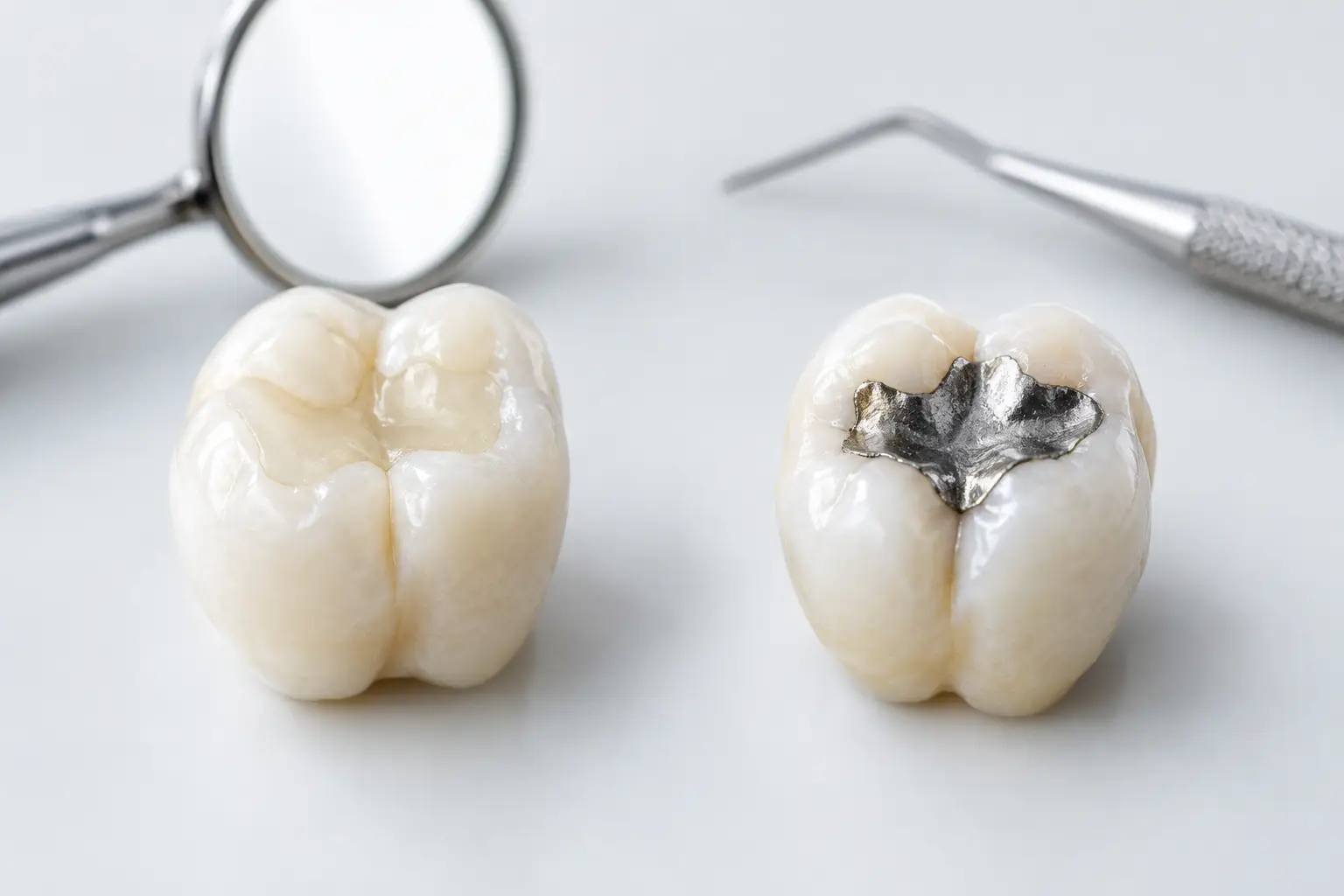
Their most obvious advantage is appearance. Composite can be colour-matched closely to your natural enamel, making it a popular choice for front teeth and visible areas of the smile. It can also bond directly to the tooth. In many situations, this allows the dentist to preserve more healthy tooth structure than may be needed for a traditional amalgam restoration.
Composite is not only a cosmetic option. Modern composite materials can perform very well in back teeth when the filling is appropriately sized, the tooth can be kept dry during treatment, and the patient has a manageable bite. For a small to medium cavity, it is often an excellent choice.
What is an amalgam filling?
Amalgam is a silver-coloured filling material that has been used in dentistry for many generations. It is made from a mixture of metals, including silver, tin, copper, and mercury. When set, it becomes a strong restoration designed to withstand chewing forces.
Amalgam is valued for its durability, particularly in large fillings on molars where the tooth receives heavy pressure. It is also less sensitive to moisture during placement than composite, which can sometimes make it practical in situations where keeping the area completely dry is difficult.
The main drawback for many patients is its appearance. Amalgam does not blend with enamel, and it may darken slightly over time. It can also make a restored tooth look greyish. For a tooth that shows when you smile or speak, that may be a meaningful concern.
Composite versus amalgam fillings: the differences that matter
The material itself matters, but the condition of the tooth matters more. A small cavity near the front of the mouth and a deep cavity on a heavily used molar create very different treatment decisions.
Appearance
Composite is the clear preference when a natural-looking result is the priority. It can be shaded to suit the surrounding tooth, so it is usually much less noticeable. This makes it especially helpful for front teeth, premolars, and visible areas near the gumline.
Amalgam is metallic and visible. Some patients are comfortable with that trade-off for a back tooth, while others prefer a tooth-coloured restoration wherever possible.
Strength and longevity
Both materials can last for many years with good oral hygiene, regular dental visits, and a bite that does not place excessive force on the restoration. Amalgam has a long history of holding up well in large back-tooth fillings. Composite technology has improved significantly, and composite can also be durable, though very large composite fillings may be more likely to chip, wear, or leak over time than smaller ones.
A filling is not meant to last forever. If decay is extensive or a large part of the tooth is weakened, a crown or another restorative option may protect the tooth more predictably than simply making the filling bigger.
Tooth preservation
Composite bonds to the tooth, which can be beneficial when restoring small or moderate areas of decay. It may allow for a more conservative preparation because the restoration is bonded into place rather than relying only on shape for retention.
With either material, the goal is always the same: remove decay, keep as much healthy tooth as possible, and restore a smooth, functional surface that is easy to clean.
Cost and insurance coverage
Cost can vary based on the number of surfaces being restored, the size of the filling, the tooth involved, and your dental plan. Composite fillings may cost more than amalgam in some circumstances, particularly for larger back-tooth restorations. Insurance plans also vary in what they cover and how they calculate reimbursement.
Before treatment, it is reasonable to ask for a clear explanation of the recommended option, your estimated out-of-pocket cost, and any available alternatives. Direct insurance billing can also make planning easier for many families.
Sensitivity and comfort
Some temporary sensitivity after any filling is normal, particularly if the cavity was deep or the tooth was already irritated. You may notice sensitivity to cold, pressure, or sweets for a short period while the tooth settles.
Composite is placed in layers and cured during the appointment, while amalgam hardens over time. Your dentist will check the bite carefully with either material. If a filling feels high after the freezing wears off, contact the office rather than trying to adjust to it. A simple bite adjustment can often relieve the pressure.
Is amalgam safe?
This is a common and understandable question. Amalgam has been studied extensively and remains an accepted restorative material for many patients. However, certain people may be advised to avoid or limit amalgam, including those with specific medical circumstances or sensitivities. Your dentist can review your health history and discuss whether amalgam is appropriate for you.
If you already have amalgam fillings that are intact and functioning well, replacing them solely because they contain amalgam is not always necessary. Removing a filling also removes some tooth structure and can temporarily increase exposure to material during the procedure. Replacement is more often considered when there is decay around the filling, a crack, leakage, a broken restoration, or a cosmetic reason that matters to you.
When composite may be the better choice
Composite is often well suited to small and medium cavities, visible teeth, and patients who prefer a natural-looking result. It can also be a strong option for back teeth when the remaining tooth structure is sound and the bite is favourable.
It may be less ideal for a very large cavity in a molar with heavy grinding forces. If you clench or grind your teeth, the material and the overall restoration design deserve extra attention. A night guard may be recommended to protect both your teeth and dental work.
When amalgam may be the better choice
Amalgam may be considered for a large restoration in a back tooth, particularly where durability and moisture tolerance are important considerations. It can be a practical option for patients who are less concerned about the filling’s colour or who need a cost-conscious approach within the limits of their treatment plan.
That said, a large cavity may signal that the tooth needs more than a filling. The decision should not be framed as composite versus amalgam alone. Sometimes the more important question is whether the tooth would be better served by a crown, an onlay, or a different restorative plan.
Your dentist should look beyond the cavity
The same material can perform differently in two different mouths. Your dentist should assess the extent of decay, the thickness of the remaining tooth, the health of the nerve, gum health, access for cleaning, and the way your upper and lower teeth meet. X-rays and a clinical examination help identify concerns that are not visible in a mirror.
At Bright Smile Dental Clinic, recommendations are based on the health and long-term function of your tooth, not a one-size-fits-all preference. If dental treatment makes you anxious, let the team know before your appointment. Gentle techniques, clear explanations, and comfort options can help you feel more at ease throughout the visit.
A filling is a chance to stop decay and preserve your natural tooth. Ask which material is being recommended, why it suits that specific tooth, what alternatives exist, and how you can help the restoration last. The most reassuring choice is one you understand and feel comfortable making.