A dental appointment can feel manageable until you are sitting in the chair, hearing instruments nearby, and waiting for treatment to begin. For patients with dental anxiety, a strong gag reflex, sensitive teeth, or a longer procedure ahead, comfort support can make a meaningful difference. When comparing oral sedation versus nitrous, the best choice depends on the level of anxiety you feel, the treatment planned, your health history, and how much recovery time you can arrange.
Both options are used to help patients feel calmer during dental care. They are not interchangeable, however. One may be a better fit for a routine restoration, while the other may provide more support for someone who has avoided care for years or is having a more involved procedure.
How nitrous oxide helps you feel more at ease
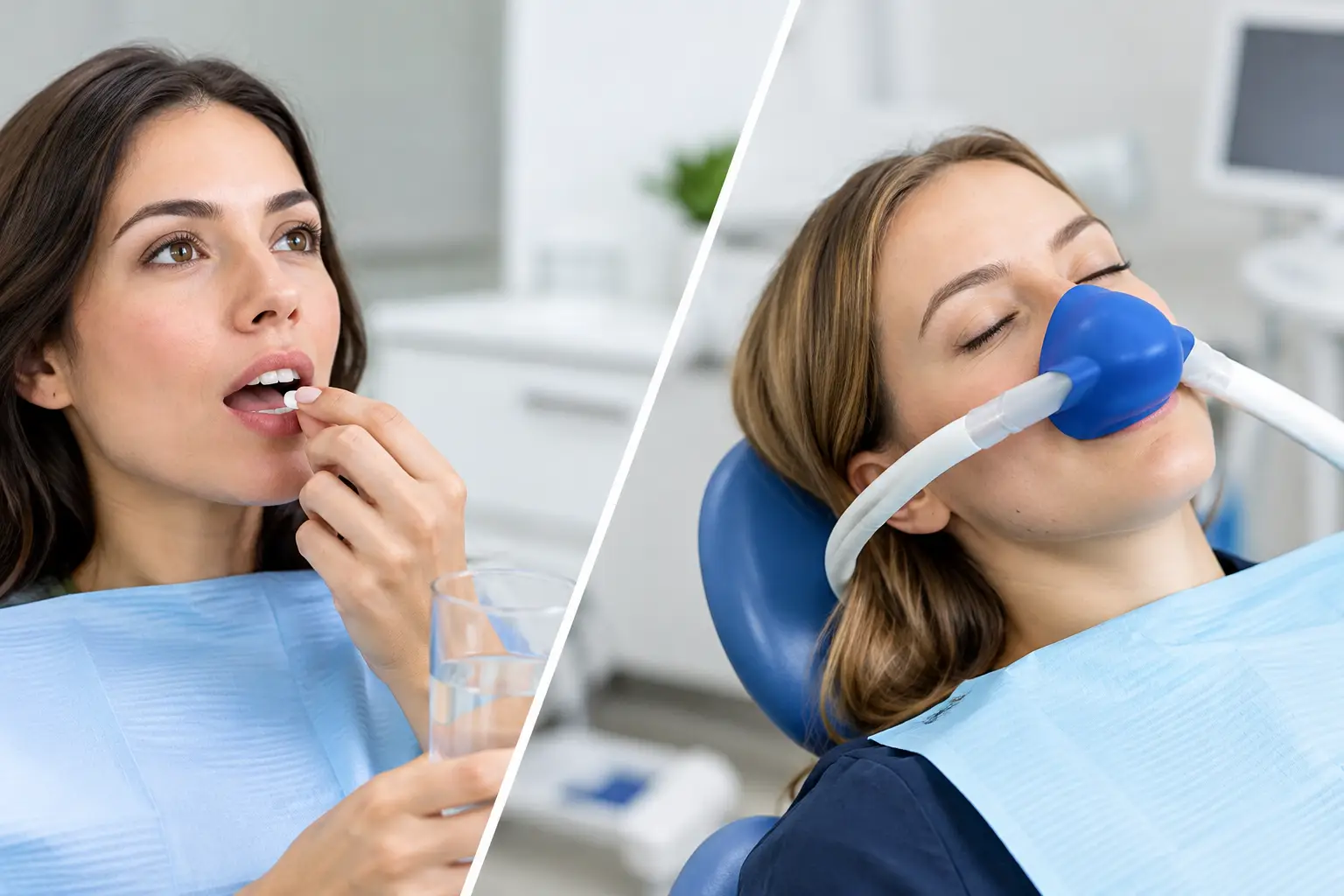
Nitrous oxide, often called laughing gas, is breathed through a small mask placed over your nose. As you inhale a carefully controlled mix of nitrous oxide and oxygen, you may begin to feel lighter, calmer, or pleasantly detached from the sounds and sensations of treatment. You remain awake and able to respond to your dental team.
One reason nitrous is popular is that it works quickly. Its calming effect usually begins within minutes, and the level can be adjusted during your appointment. At the end of treatment, you breathe oxygen for a short period to help the effects wear off.
For many patients, nitrous is helpful when anxiety is mild to moderate, when injections are a concern, or when a cleaning, filling, crown preparation, or other appointment feels difficult to get through without extra reassurance. It can also be a good option for patients who want support but prefer not to take an oral medication.
What recovery is like after nitrous
Nitrous oxide generally clears from the body quickly. Many people feel back to normal shortly after the appointment and can continue with their day, subject to the dentist’s instructions and their individual response. Some patients may experience brief nausea, lightheadedness, or a headache, particularly if they have not followed pre-appointment eating instructions.
Nitrous is not right for everyone. Certain breathing conditions, a blocked nose or sinus infection, some medical circumstances, and individual sensitivities may affect whether it is appropriate. Your dentist will review your health history before recommending it.
What oral sedation involves
Oral sedation uses a prescribed medication taken before the appointment, exactly as directed by the dentist. It is intended to create a deeper level of relaxation than nitrous for many patients. You are still conscious and can respond to instructions, but you may feel very drowsy, less aware of the passage of time, and less focused on the details of treatment.
Some patients remember little about the appointment afterward. That can be especially reassuring for people whose anxiety has led them to postpone dental visits, even when they know treatment is needed. Oral sedation may also be considered when a procedure is lengthy, when multiple treatments are planned in one visit, or when a strong gag reflex makes care challenging.
The medication and dose are selected with care based on your health history, current medications, age, weight, and the planned procedure. Oral sedation requires advance planning. It is not something that can usually be added casually at the start of a visit.
Planning for an oral sedation appointment
Because drowsiness can last beyond your dental treatment, you will need a responsible adult to bring you to the appointment and take you home. You should not drive, operate machinery, make important decisions, or return to work until your dentist advises it is safe to do so.
Your care team will give you specific instructions about eating, drinking, medications, and what to wear. Follow them closely, even if you have had sedation in the past. A change in your health or prescription medications can change what is safest for you.
Oral sedation versus nitrous: the practical differences
The clearest difference is often how long the effects last. Nitrous works quickly and usually wears off quickly, making it convenient for patients who need a shorter recovery period. Oral sedation takes longer to begin working and can leave you sleepy for the remainder of the day.
The intensity of relaxation is another consideration. Nitrous may take the edge off nerves while keeping you alert and engaged. Oral sedation may be more suitable when anxiety is more significant or when remaining relaxed for a longer procedure would otherwise be difficult.
Your appointment logistics also matter. With nitrous, you may have more flexibility after the visit if your dentist confirms you are ready. With oral sedation, arranging an escort and protecting the rest of your day are essential parts of the treatment plan.
Cost and insurance coverage can vary as well. Before treatment, ask for a clear estimate and check how your dental plan handles sedation services. For eligible patients using the Canadian Dental Care Plan, coverage and any remaining patient portion should also be reviewed in advance. Clear information helps you make a decision based on comfort and practical needs, without surprises.
Which option may suit your situation?
There is no single answer for every anxious patient. A person who feels nervous about a single filling may do very well with nitrous and a calm, step-by-step approach. Someone having surgical treatment, extensive restorative work, or treatment after a long gap in care may benefit from discussing oral sedation.
Your dentist may consider nitrous if you want fast-acting support, prefer to remain fully alert, or need to resume normal activities sooner. Oral sedation may be considered if dental anxiety feels overwhelming, previous appointments have been hard to complete, or you are concerned about managing a longer visit.
Sedation does not replace local anesthetic. Even when you feel calm, the area being treated still needs to be properly numbed so you remain comfortable during dental work. Sedation and freezing are different tools that can work together.
Safety begins with an honest conversation
A safe recommendation starts well before treatment. Share your complete medical history, including sleep apnea, breathing concerns, liver or kidney conditions, pregnancy, allergies, and past reactions to medications or anesthesia. Tell your dentist about every prescription, over-the-counter medication, vitamin, and supplement you use. Do not adjust medication or take anything extra to relax without your dentist’s guidance.
It is also helpful to be honest about what triggers your anxiety. Is it the needle, the loss of control, sounds, a past difficult experience, or concern about gagging? Those details allow your dental team to pair sedation with practical comfort measures, such as breaks, a stop signal, explanations before each step, and a gentler pace.
At Bright Smile Dental Clinic, the conversation is never about pushing you toward a particular option. It is about understanding what will help you receive needed care comfortably and safely.
Ask these questions before you decide
Before booking a sedated appointment, ask how the option works, what you are likely to feel, what you need to do before and after the visit, and whether you need someone to accompany you. You can also ask why one option is being recommended over another, what the estimated cost will be, and whether your planned treatment can be completed in one appointment.
A good sedation plan should feel clear, not intimidating. You should understand the purpose of the option, its limitations, and the instructions that protect your safety.
Dental anxiety deserves patience, not judgment. Whether nitrous provides the right amount of calm or oral sedation gives you the added support you need, a thoughtful conversation can turn a postponed appointment into a positive step toward a healthier, more comfortable smile.