A missing tooth can change more than a smile. It can make chewing feel uncertain, affect speech, and lead people to avoid photos or favourite foods. When considering dentures versus implants, the best choice is rarely about choosing the “better” treatment in general. It is about choosing the replacement option that fits your oral health, comfort level, timeline, and budget.
At Bright Smile Dental Clinic, we begin with a conversation and a careful examination. Whether you are replacing one tooth, several teeth, or a full arch, you deserve clear information and a plan that feels manageable.
Dentures Versus Implants: The Key Difference
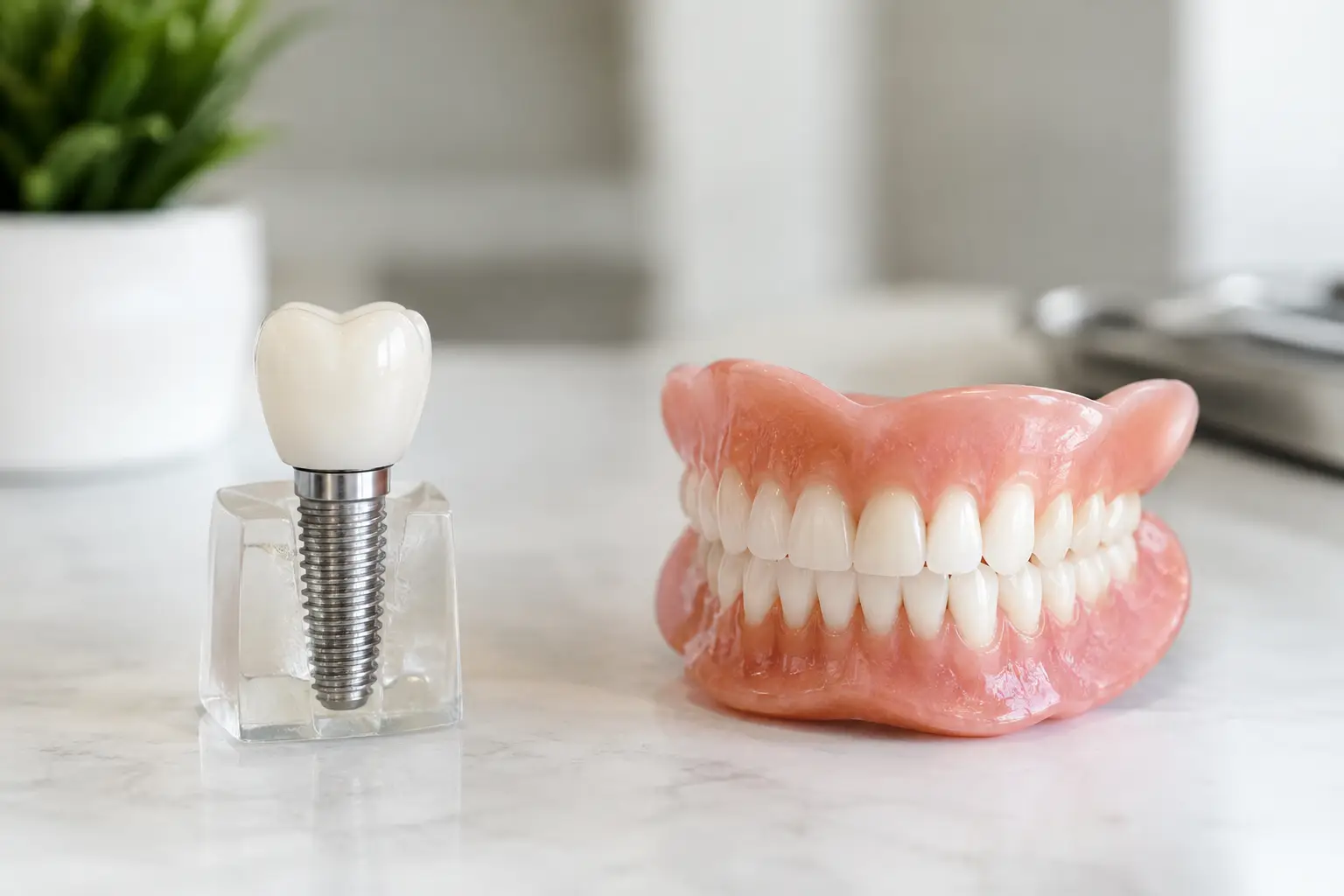
Dentures are removable appliances designed to replace missing teeth. A full denture replaces all teeth in the upper or lower jaw, while a partial denture fills spaces when some healthy natural teeth remain. Modern dentures can look natural and provide an important improvement in daily function and appearance.
Dental implants are small titanium posts placed in the jawbone to replace tooth roots. After healing, an implant may support a single crown, a bridge, or a full denture. Because implants are fixed within the bone, they can offer a more secure feel than conventional removable dentures.
Both solutions can restore a smile. The meaningful differences are in stability, daily maintenance, treatment time, bone preservation, and upfront cost.
When Dentures May Be a Good Choice
Dentures can be a practical and effective option for many patients, especially when several or all teeth need to be replaced. They are usually less costly at the beginning of treatment than implants, and they do not require surgery to place titanium posts.
A conventional denture may suit someone who needs a replacement relatively soon, has health considerations that make surgery less appropriate, or prefers a non-surgical approach. Partial dentures can also be helpful when a person has remaining teeth that are healthy enough to keep but needs an affordable way to close visible gaps.
Today’s dentures are individually designed to support facial appearance and help you speak and eat more comfortably. Still, they take an adjustment period. New dentures can initially feel bulky, and some patients need time to adapt to talking and chewing with them. Lower dentures in particular may move during meals because there is less surface area for suction than in the upper jaw.
Dentures also need regular care. They should be removed for cleaning, kept moist when not in use, and checked periodically as the shape of the gums and jaw changes. Relines, repairs, or replacement may be needed over time to maintain a comfortable fit.
When Dental Implants May Be a Good Choice
Implants are often appealing to people who want a tooth replacement that feels closer to a natural tooth. A single implant crown is fixed in place, so it does not come out for cleaning. For people with multiple missing teeth, implant-supported bridges or dentures can provide added stability and reduce the worry of a denture shifting unexpectedly.
One of the most significant benefits of implants is their relationship to the jawbone. After a tooth is lost, the bone in that area can gradually shrink because it no longer receives chewing forces through a tooth root. An implant helps stimulate the bone, which may help preserve the contours of the jaw over time.
Implants require adequate bone, healthy gums, and a commitment to daily oral hygiene. Gum disease must be treated and controlled before implants are placed. Some patients may need bone grafting first, especially if teeth have been missing for a long time. This can add treatment time, but it may create a stronger foundation for a lasting result.
The process is also more involved than receiving a conventional denture. Implant placement is a surgical procedure, followed by a healing period before the final crown, bridge, or denture is attached. We use gentle techniques and can discuss sedation options for patients who feel anxious about dental treatment.
Comfort, Eating, and Confidence in Daily Life
For many people, daily comfort is the deciding factor. Conventional dentures can restore the ability to eat a wider variety of foods than having no teeth, but very hard, sticky, or chewy foods may still be difficult. Denture adhesive can improve retention for some patients, though it does not replace a proper fit.
Implants generally provide stronger chewing support because they are anchored in the jaw. Patients with implant-supported teeth often find it easier to enjoy foods such as apples, vegetables, and meats. That said, implants are not indestructible. They still require thoughtful home care and regular dental visits.
Confidence matters, too. Some people are completely comfortable with well-fitting dentures. Others feel self-conscious about removing them at night or worry about movement while speaking. Implant-supported options can reduce those concerns, but they are not automatically necessary for every patient. The right choice depends on what matters most to you.
Understanding Cost and Long-Term Value
Cost is understandably a major consideration in dentures versus implants. Conventional dentures tend to have a lower initial cost. Implant treatment costs more upfront because it involves surgical planning, placement, healing, and custom restorations.
However, it helps to look beyond the first appointment. Dentures may need adjustments, relines, repairs, or replacement as the mouth changes. Implants may have a higher starting investment, but with healthy gums, strong home care, and routine professional maintenance, they are designed as a long-term solution.
Coverage can vary by insurance plan and treatment type. Eligible patients may also have support through the Canadian Dental Care Plan, depending on their circumstances and the services approved under their coverage. Before treatment begins, a clear cost discussion can help you understand your options, available benefits, and any phased approach that may make care more achievable.
An Option Between Conventional Dentures and Fixed Implants
The choice does not always have to be all or nothing. Implant-supported dentures combine a removable denture with strategically placed implants. The implants help hold the denture more firmly in place, improving stability during eating and speaking.
Depending on the design, the denture may still be removed at home for cleaning or may be secured by a dental professional. This approach can be an excellent middle ground for people who want more confidence than a conventional denture provides but may not need or want a fixed full-arch restoration.
What Your Dentist Will Consider
A personalized recommendation starts with more than a look at the missing space. Your dentist will assess the health of your gums, the condition of remaining teeth, bone levels, bite, medical history, and expectations for treatment. Digital imaging may be used to plan implant placement carefully and assess whether bone grafting is needed.
Your preferences matter just as much. A helpful consultation should address four practical questions:
- How soon do you want to restore your smile and chewing ability?
- Are you comfortable with a surgical procedure and a longer healing timeline?
- How important is a fixed, non-removable option in your day-to-day life?
- What investment feels realistic now, and what maintenance should you plan for later?
There is no benefit in recommending treatment that does not fit your health needs or feels overwhelming. In some cases, a denture is the right first step, with implants considered later. In others, saving a natural tooth with a crown, bridge, or gum treatment may be preferable to extraction and replacement.
Caring for Your New Teeth
Whether you choose dentures or implants, ongoing care protects your comfort and investment. Dentures should be cleaned daily with products made for dental appliances, not abrasive toothpaste. They should also be removed as directed so the gums can rest and be assessed regularly.
Implant crowns, bridges, and implant-supported dentures need daily plaque removal around the gums and restoration. Brushing, cleaning between teeth or beneath bridges with the right tools, and attending hygiene visits are essential. Implants cannot get cavities, but the tissues around them can become inflamed or infected without proper care.
If you are weighing tooth replacement options, begin with an examination rather than pressure to decide immediately. A calm, informed conversation can make the next step clearer – and help you choose a smile solution that supports your health, comfort, and confidence for years to come.