A smile makeover is rarely one treatment applied to every tooth. For one person, it may mean whitening before a wedding. For another, it may involve replacing a missing front tooth, improving gum health, and correcting years of wear. These smile makeover examples show how a carefully planned approach can improve appearance while protecting the comfort and function of your bite.
At Bright Smile Dental Clinic, treatment begins with listening. You may be concerned about stained teeth, a gap that shows in photos, old dental work, or discomfort when chewing. A complete assessment helps determine which changes are cosmetic, which are necessary for oral health, and which options make practical sense for your timeline and budget.
What Is Included in a Smile Makeover?
A smile makeover is a personalized combination of dental treatments designed to address the concerns that matter most to you. It can be as conservative as whitening and bonding, or it can include restorative work such as crowns, bridges, implants, gum treatment, or orthodontics.
The right plan depends on more than the colour or shape of your teeth. Your dentist will consider your gum health, bite, existing fillings and crowns, tooth enamel, jaw comfort, and the way your teeth function when you speak and eat. A result that looks natural should also feel comfortable and be maintainable over time.
Smile Makeover Examples for Common Concerns
A brighter smile with professional whitening
A patient may be generally happy with the shape and position of their teeth but notice yellowing from coffee, tea, red wine, or natural ageing. Professional whitening can be a straightforward option when the teeth and gums are healthy.
Whitening works on natural tooth enamel, not on crowns, veneers, fillings, or bonding. If you have visible older restorations, your dentist may recommend whitening first and then replacing only the restorations that no longer match. This can create a more consistent result without changing teeth that do not need treatment.
Chipped edges and small gaps improved with bonding
Composite bonding uses tooth-coloured material to repair a chipped corner, soften uneven edges, close a small gap, or improve the appearance of a slightly narrow tooth. It is often a conservative choice because little to no natural enamel may need to be removed.
Bonding can be an excellent option for minor changes, particularly when a patient wants a more affordable or reversible-feeling approach than veneers. The trade-off is that composite can stain or chip over time, especially for people who bite nails, chew ice, or grind their teeth. Regular maintenance and a night guard may be recommended where appropriate.
Veneers for shape, colour, and symmetry
Porcelain veneers are thin custom shells placed on the front surfaces of teeth. They may be considered when several front teeth have worn edges, persistent discolouration, irregular shapes, or small spaces that bonding alone may not address predictably.
One common makeover involves veneers on selected upper front teeth to create a more balanced smile line. Veneers can offer durable, stain-resistant results, but they are not the right answer for every situation. They usually require some enamel preparation, and they should only be planned after checking for gum disease, tooth decay, and bite issues. A patient who clenches or grinds may need protective measures to help preserve the work.
Straighter teeth with Invisalign treatment
Crowding, spaces, and teeth that have shifted after previous orthodontic treatment can affect both confidence and cleaning. Invisalign clear aligners may gradually move teeth into a more balanced position without traditional metal brackets.
For some patients, orthodontic treatment is the best first step before whitening, bonding, or veneers. Aligning the teeth can reduce the amount of reshaping needed later and make the final result easier to clean. It does require commitment: aligners must be worn as instructed, and treatment time varies based on the movements required.
Worn teeth restored with crowns and bite planning
Teeth can become shorter, flatter, or more sensitive after years of grinding, clenching, acid erosion, or heavy chewing forces. In these cases, a makeover is not simply about making teeth look longer. It may involve rebuilding damaged teeth with crowns or bonding while considering how the upper and lower teeth meet.
This type of treatment requires careful planning. Restoring tooth shape without addressing the forces that caused the wear can shorten the life of the new work. Your dentist may discuss a night guard, TMJ assessment, or a phased plan that restores the most damaged teeth first.
Replacing a missing tooth with an implant, bridge, or denture
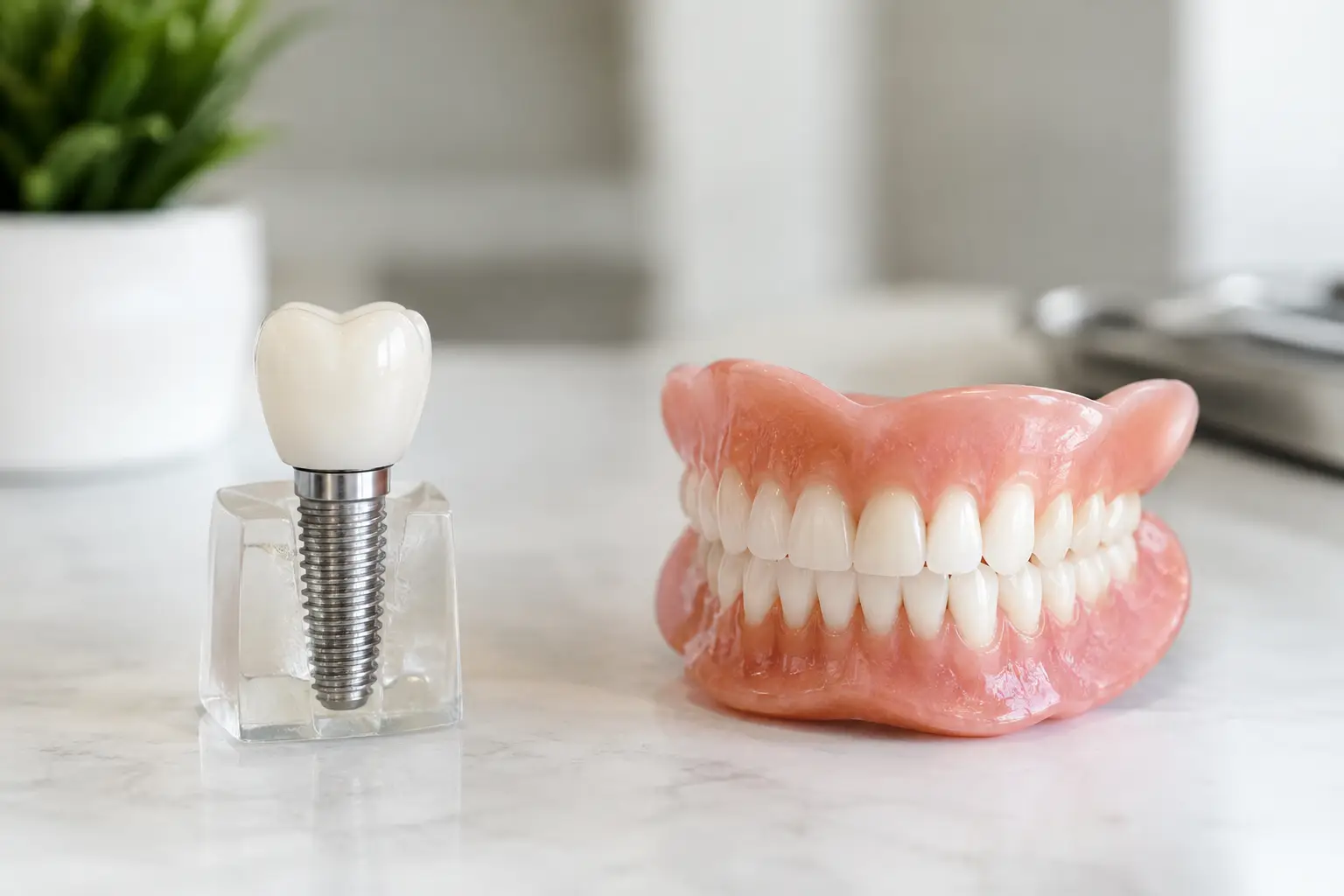
A missing tooth can leave a visible space, affect speech, make chewing more difficult, and allow nearby teeth to shift. Depending on the location of the gap, bone levels, medical history, and personal goals, treatment may include a dental implant, fixed bridge, or partial denture.
An implant replaces the root of a missing tooth and supports a custom crown, but it requires adequate bone and a healing period. A bridge may be a practical option when neighbouring teeth already need crowns. A partial denture can provide an accessible solution for multiple missing teeth. Each choice has advantages, costs, and maintenance needs that deserve a clear conversation before treatment begins.
Gum treatment as part of a healthier-looking smile
Sometimes the most noticeable change is not made to the teeth at all. Red, swollen, bleeding gums or gums that have receded can make a smile look uneven and may signal periodontal disease. Treating gum inflammation is essential before cosmetic treatment because healthy gums provide the foundation for restorations and support long-term oral health.
For a patient with a “gummy” smile or uneven gumline, gum contouring or grafting may be discussed in specific cases. These treatments are planned carefully, as gum changes should support health and stability, not just appearance.
Why a Complete Assessment Matters Before Cosmetic Treatment
Online before-and-after photos can be inspiring, but they cannot show everything beneath the surface. A tooth that appears dark may need whitening, or it may have an old filling, a crack, or a nerve problem. A gap may be suitable for bonding, or it may be related to gum disease or tooth movement that requires a different solution.
Before recommending treatment, your dental team may examine your teeth and gums, review X-rays where needed, assess your bite, and discuss your health history. You should also have time to ask practical questions: How long will this last? What maintenance is required? Are there lower-cost phased options? Will insurance coverage apply to any restorative treatment?
For patients who feel anxious, a comfort-first approach can make planning feel more manageable. Gentle techniques, clear explanations, and sedation options where appropriate can help you move forward at a pace that feels right.
Choosing the Right Starting Point
The best smile makeover does not always begin with the most visible concern. If there is active decay, gum disease, pain, or a damaged tooth, protecting your health and function comes first. Cosmetic improvements can then be planned around a stable foundation.
You may also choose to phase treatment. For example, a patient might begin with hygiene care and whitening, move to Invisalign treatment when ready, and complete small bonding adjustments later. This approach can spread out appointments and costs while still working toward a clear goal.
A smile makeover should still look like you, just healthier, more comfortable, and easier to share. A personal consultation can turn the examples you have seen into a realistic plan that respects your teeth, your priorities, and your confidence.